3rd October 2026 Insects
Insects are vital for ecological balance and food production.
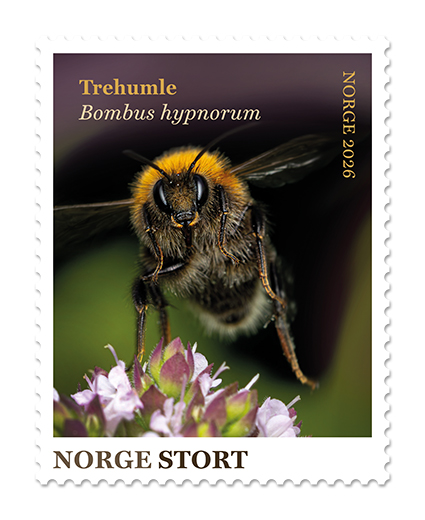
They pollinate plants, decompose organic matter, and serve as food for other animals. Pollinating insects such as bees, bumblebees, hoverflies, beetles, and butterflies are especially important. About 75% of global food crops depend on insect pollination, and nearly 90% of wild flowering plants rely on insects to reproduce and spread.
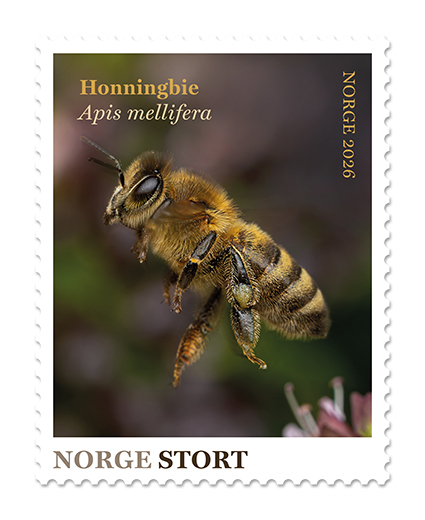
Many insect species are declining, including one-third of Norway’s wild bee species. Causes include habitat loss, pesticides, climate change, and invasive species. The tree bumblebee is a common species in Norway, easily recognised by its brown midsection and white tail. It appears early in spring and pollinates plants like willow and coltsfoot. The honeybee, kept by beekeepers, is also a key pollinator and produces honey and beeswax. Both species are essential to ecosystems and agriculture.
Facts
- Values and subjects: Norway large: Tree bumblebee Norway large: Honeybee
- Design: Hanne Karlsrud Bye
- Photos: Roger Nesje
- Size: 30 x 38 mm
- Issued in: Sheetlets of 10 stamps
- Print: Offset from Joh. Enschedé Security Print
- Print run: 545,000 of each motif